He had been with the company for 27 years. Let's call him Ed — because his story deserves a name. He had joined as a teenager — a factory apprentice with quick hands and a quicker mind. Currently capable enough to run the department. Everyone knew it. He knew it. But the department head role never came. And for the past 11 years — Ed told himself it was the company's fault. The story was airtight. He'd been telling it so long it had become his truth.
Then in a workshop Ed challenged the Directors about why the role had not been given to him. Being a coach in that moment, I asked: "What will give you full inner power and authority to ask for the role you know you deserve?"
Ed didn't answer immediately. He sat with it. And then — quietly, in front of everyone — he answered himself. "When I know I really deserve it. Because right now — while I continue what I'm doing — I know why I am not being given the role. I will prove that I deserve it and then ask."
Nobody told him that. No coach handed him the answer. The question simply made him stop running away from what he already knew. Seven months later, Ed walked back in. In his hands — a shuka. The iconic red and black checked cloth of the Maasai people. Bought with his own honest money, manufactured at the very company where he had spent 27 years. Eyes full. "I have got my role. I am a changed human."
Somewhere in Ed's story — you'll find yourself. Three things about coaching most people never discover. The kind you only understand when you've lived them.
ONE — The coach's job is to make you stop running.
He knew. For 11 years — he knew. He knew why the role wasn't coming. He knew what he was doing. He knew the cost. And every day, for 11 years, he found ways to not look directly at it. This is not unusual. It is the most human thing there is.
We are not short of answers. We may be short of the courage to face our own light.
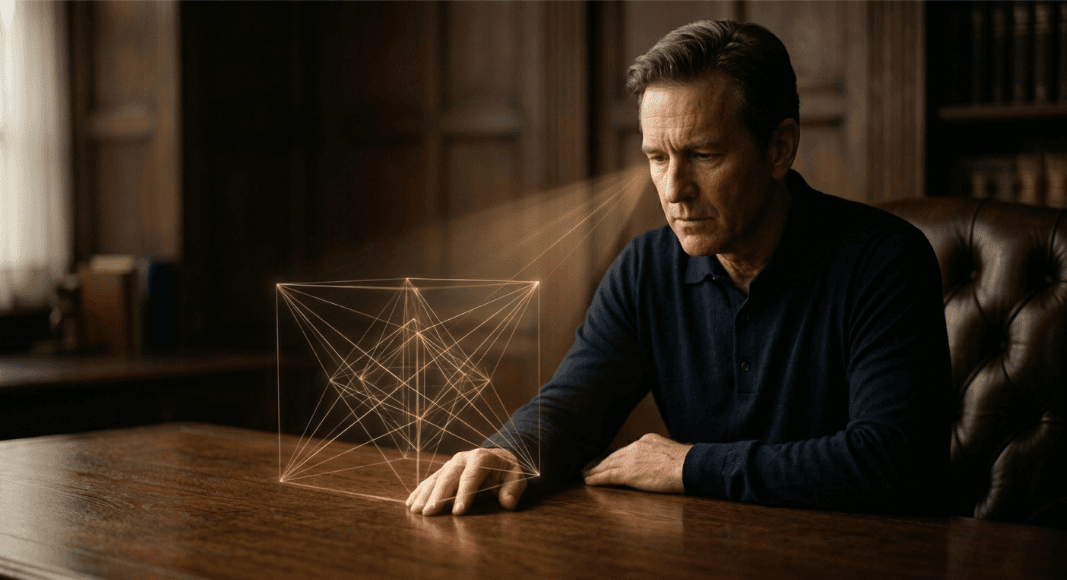
The coach doesn't bring the answer into the room. The answer is already there — it arrived with you. What the coach does is ask the question that makes it impossible to keep looking away. Not through confrontation. Not through judgment. Through a question that illuminates precisely the exact place you've been avoiding. The coach brings a torch. You choose to take it or not — and where to point it.
TWO — The real coaching happens between sessions.
He didn't transform in the workshop. Ed transformed in the seven months after it. In the ordinary days. In the small decisions. In the moments when the old way was available — and he chose differently. And then chose differently again.
The coaching session is 45 minutes. The real coaching work is the other 167 hours between sessions.
Most people measure the quality of a coaching session by what happened inside it. The measure that matters most — what did you do with it? What shifted in you on a Tuesday evening when nobody was watching? Coaching is not a relationship you show up to. It is a practice you live between sessions. The session plants the seed. The 167 hours grow the oak.
THREE — The goal of coaching is to make the coach irrelevant.
He doesn't need the workshop anymore. He doesn't need someone to ask him the question. Ed has learned to ask it himself. That is the point. That was always the point.
A coach who keeps you dependent has failed. The measure of great coaching is not how indispensable the coach becomes — it is how unnecessary.
After great coaching — you notice your patterns faster. You ask yourself better questions. You catch the story you're telling before it catches you. You have, in short, become your own coach. Your inner coach never clocks out.
The oak was always in the acorn. Ed bought the shuka with honest money. Not because a coach told him to. Because he had looked at himself honestly — and chose to become who he already was. That is what one-on-one coaching makes possible. Not a new you. The real you — finally chosen.
P.S. Our deepest fear is not that we are inadequate. Our deepest fear is that we are powerful beyond measure. It is our light — not our darkness — that most frightens us. The torch is already in your hand. The question is whether you'll point it at the right place.
— Adapted from Our Deepest Fear, Marianne Williamson
This post is part of the BE IN CHOICE journey →